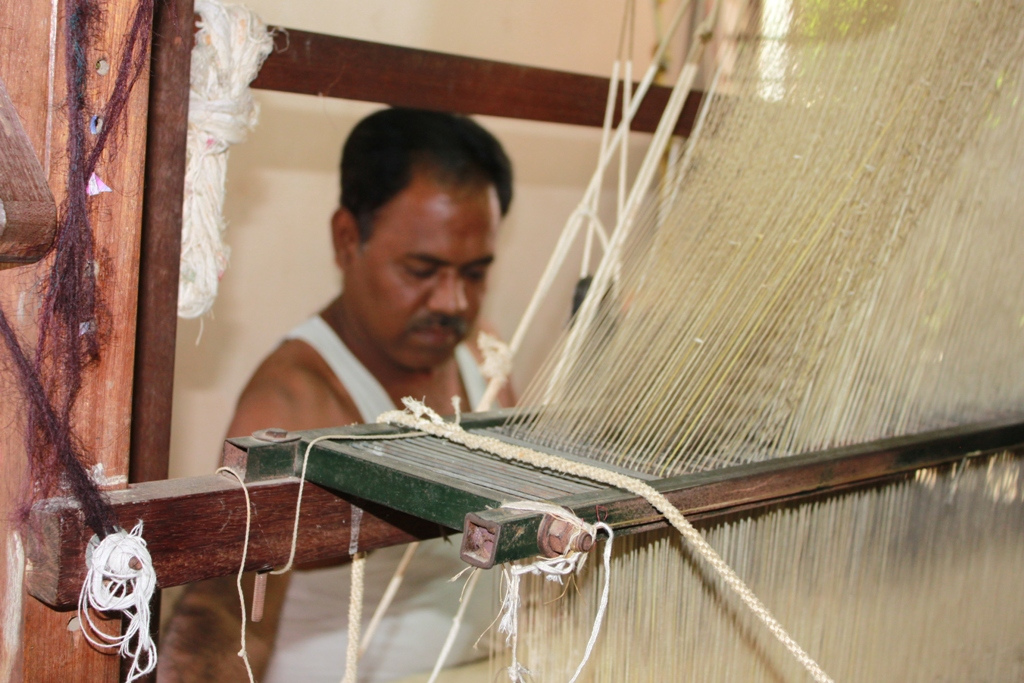
Winding the weft yarn
The NID documentation follows coloured silk from bundles onto bamboo spools and then onto smaller spindles for the shuttle. This preparation makes the yarn manageable during weaving. Much of a saree’s work happens before its pattern becomes visible.
Preparing the warp
Warping arranges the lengthwise threads into an ordered sheet for the loom. The documented workflow includes stretching, checking tangles, and preparing the yarn before loading the beam. This work depends on coordination and orderly thread handling.
Setting up the loom
Once the warp is prepared, the loom must be threaded and the design setup made ready. Preparation is a separate stage from the actual weaving. A statement of “weaving days” may exclude design, dyeing, setup, finishing, and waiting time.
How to discuss a commission
Ask for a schedule that names stages, not just a single production number. Confirm when the design is fixed, when materials are available, when weaving is expected to begin, and what happens if a stage slips. Allow time to inspect the completed piece before an important event.
- Design and material approval.
- Yarn preparation and loom setup.
- Weaving, finishing, and inspection.
- Delivery and any agreed alteration time.
Give approvals their own place in the schedule
Ask who is waiting for which decision. A colour reference, a revised border or a late change to the required length may affect the agreed order plan. Keep a dated approval record rather than relying on the latest message in a long conversation. Ask for a revised delivery estimate whenever a significant part of the brief changes.
Sources & further reading
References support the passages where they are cited. Comparison worksheets, shopping questions and planning examples are practical editorial guidance.