Read with context
Knowledge has roots.
The archive brings together published craft documentation, official identification schemes, and conservation guidance, alongside our practical editorial perspectives.
How to use the guides
References sit next to the relevant passages. Shopping checklists and design exercises are editorial guidance; they do not authenticate a particular saree. The October 2026 additions use AI-assisted drafting with checks against the linked sources. Original sources may describe one workshop or historical period, and should not be treated as a specification for every piece made today.
A careful use of language
We distinguish documented history from oral tradition, and regional identity from material and production claims. Names and transliterations vary. Care guidance for historic textiles calls for a conservator’s assessment; it is not a universal washing recipe for silk sarees.
The reference shelf
Kancheepuram silk sarees: regional heritage
Regional context and the relationship between the town, its textiles, and weaving cooperatives.
Kancheepuram Silk · GI application 15
Primary registry entry for the geographical indication and its authorised users.
Silk Weaving — Kanchipuram: introduction
Field documentation by Prof. Bibhudutta Baral, Antony William, Mahesh, and Srikanth.
Tools and materials
Silk, zari, shuttles, looms, and yarn preparation tools.
Dyeing process
A documented yarn-dyeing workflow, not a universal recipe for every workshop.
Traditional spinning process
Winding coloured yarn onto spools and spindles before weaving.
Warping process
Preparation and alignment of lengthwise threads.
Weaving process
Loom preparation, jacquard cards, and handloom operation.
Products and motifs
Documented pattern vocabulary and contrast-colour structures.
Weaving at the Craft Education and Research Centre
A practising weaving centre’s account of korvai, pitni, and design preservation.
Silk Mark: frequently asked questions
Scope of silk assurance, limits regarding zari, and consumer verification.
What is Handloom Mark?
Purpose and identification of the Handloom Mark.
Handlooms, Handicrafts, Textiles and Khadi: policy note
Tamil Nadu Zari Limited and zari-testing context. Historical policy information; not a current quotation.
Basic care — Textiles
General textile handling and storage principles, adapted cautiously for personal collections.
Rolled storage for textiles · CCI Note 13/3
Suitable supports, unbuffered tissue, and limits of rolled storage.
Washing non-coloured textiles · CCI Note 13/7
Explains why historic silk and composite textiles need specialist assessment; its washing procedure is not a silk-saree recipe.
Textiles and the environment · CCI Note 13/1
Light, moisture, pollution, and environmental damage.
Caring for textiles and costumes
Preventive conservation and the vulnerability of fibres and textile structures.
Banaras Brocades and Sarees · GI application 99
Official registered name and geographical-indication record; consult the specification for its scope.
Dream of Weaving: Banaras Sarees & Brocades
January 2007 study of brocade techniques, including supplementary-weft patterning and kardhial. Historical prices and production figures are not current quotations.
Real places. Real work.
Photography & credits
Documentary images are presented for learning and illustration. They do not identify verified sellers in our planned marketplace.
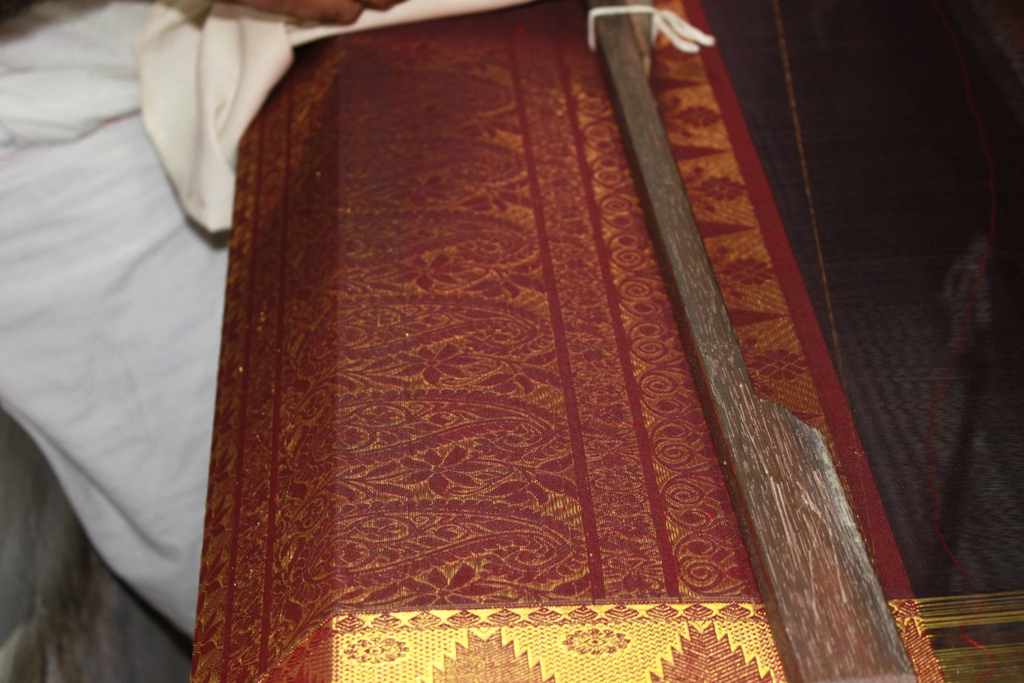
Red and gold patterned silk being woven on a loom in Kanchipuram.
Original file retained; displayed with layout cropping.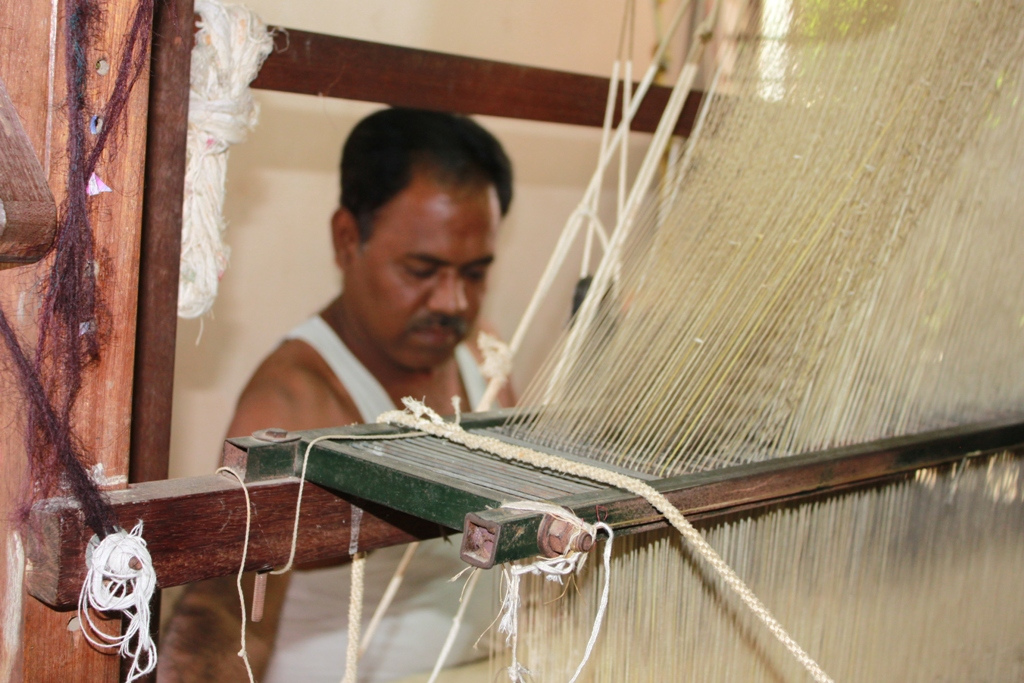
A weaver working behind the silk threads of a handloom in Kanchipuram.
Original file retained; displayed with layout cropping.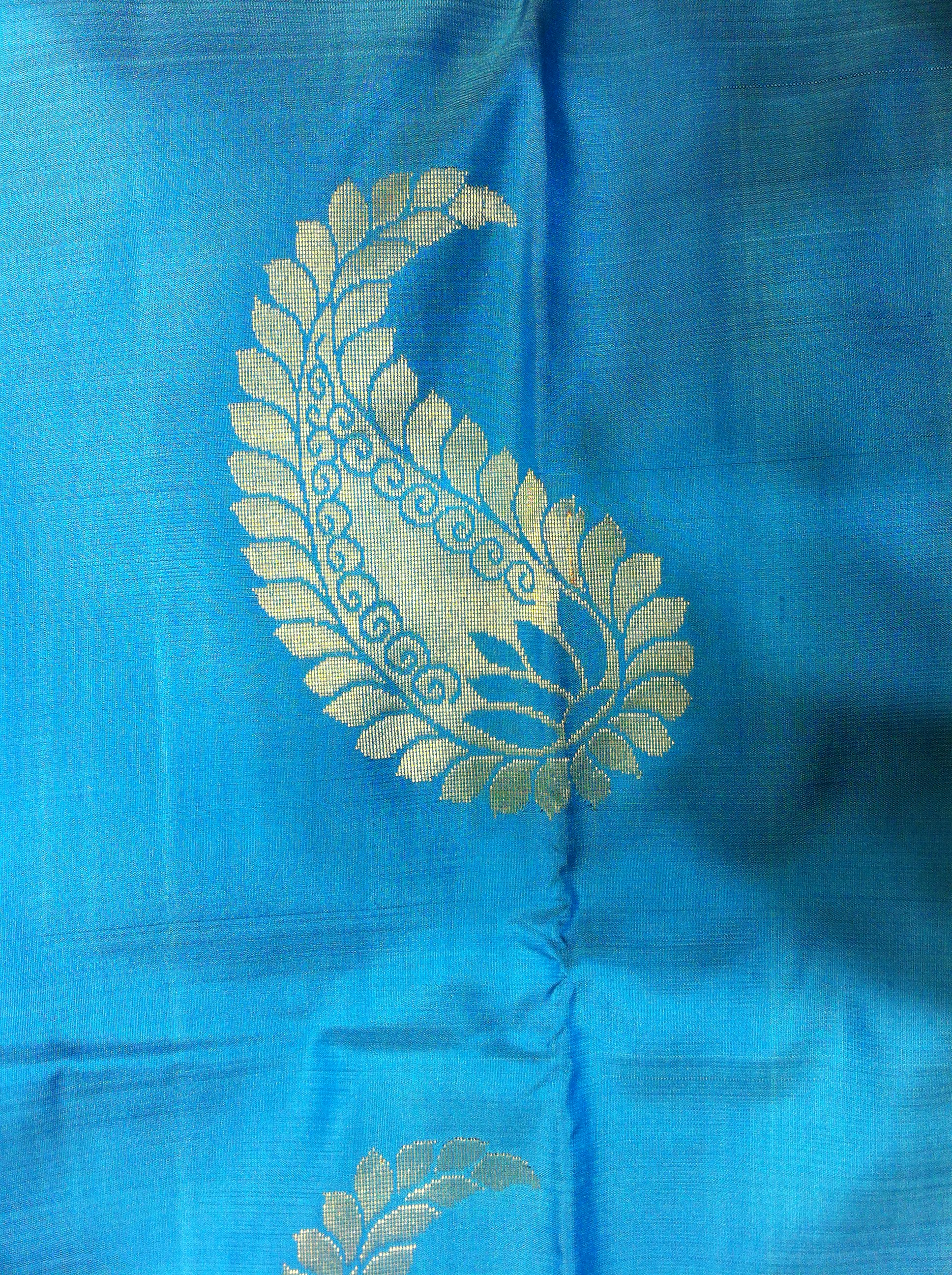
A gold mango-shaped maanga motif woven into blue Kanchipuram silk.
Original file retained; displayed with layout cropping. Any image adaptation remains under CC BY-SA 3.0.