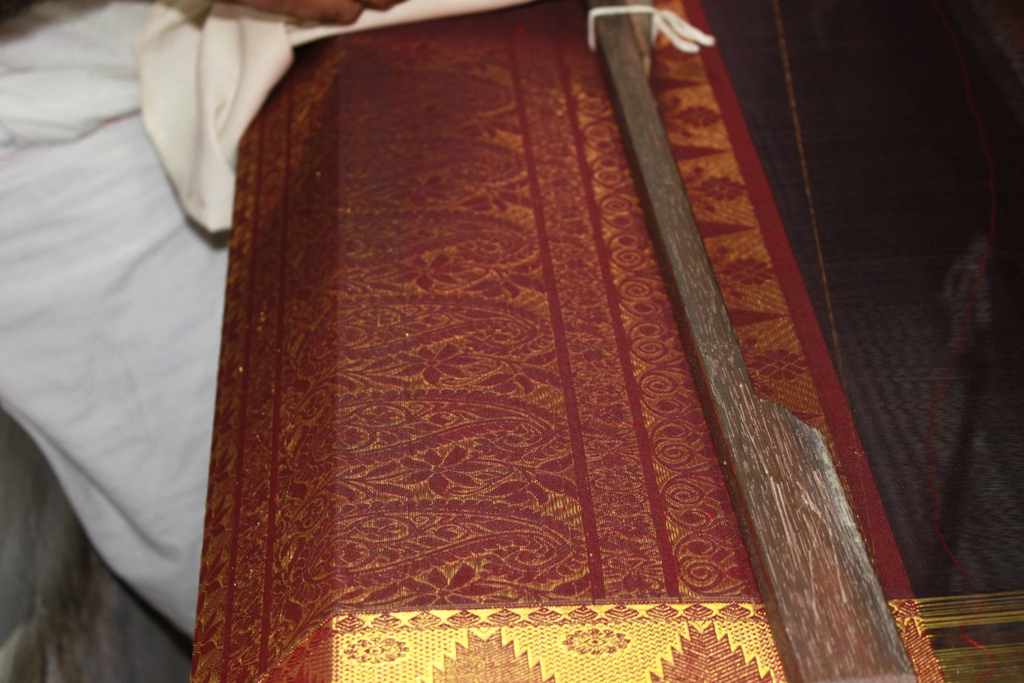
Korvai: where body meets border
Kalakshetra’s practising weaving centre describes korvai as interlinking the differently coloured body and border wefts during weaving. Its traditional method uses separate shuttles and coordinated work. The border is integrated on the loom; this is different from sewing a decorative strip onto completed cloth.
Petni: the transition to the pallu
The same account calls the specialised pallu connection “pitni”, a spelling variant often written petni. It concerns the transition between body and pallu, while korvai concerns the relationship along the borders. Keeping those locations separate makes the terminology easier to use.
Ask to see the construction
Request clear views of the body-to-border area and the body-to-pallu transition, including the reverse. Ask the maker to describe how the joins were made. A contrast colour alone is not a complete explanation of technique.
Use the terms with precision
Avoid treating a single visible ridge or join as a universal authenticity test. Design and production choices vary, and an image cannot establish the full production history. If traditional korvai is important to your purchase, have that specific claim recorded against the item.
- Where is the border join?
- Where does the pallu transition begin?
- What technique does the maker say was used?
Sources & further reading
References support the passages where they are cited. Comparison worksheets, shopping questions and planning examples are practical editorial guidance.